Showing posts with label Time After Time. Show all posts

Saturday, 4 July 2015

Review Of "Terminator- Genysis" movie


I'm a huge fan of "Terminator" so much so I paid homage to it in one of my novels. "Terminator 1" would be in my all time top-ten movies. "Terminator 2 - Judgement Day" had a few flaws, but the Terminator (the new improved T-1000 that could alter its own molecular structure to flow as well as move like a solid) itself was an extraordinary imaginative creation. "Terminator 3 - Rise Of The Machines" put some more meat on the bones of the backstory, how SkyNet arose in the first place to start the war of machines against man. "Terminator 4 - Salvation" was pretty poor in the same way as "Godfather 3" let down the side after its supreme two prequels.

And now we have "Terminator 5 - Genysis". A pretty redundant exercise in every one of its aspects. It brings nothing new to the franchise, in terms of plot, world-building, visuals or characters and some of these I believe has actually made a retrograde step. The film ostensibly tries to knit together narrative strands of all the previous movies into one coherent story across the timelines inhabited by those films. But what it ends up doing is a sort of "best bits" mess of a movie, plucking familiar tropes and scenes and referencing them in a way that isn't lazy so much as unimaginative. For example when the protagonists travel through time they are encountered by three street punks as in "Terminator 1". But there is no confrontation, and the naked time travellers come by clothes without having to battle anyone for them. 

The time travel paradoxes are never really explained satisfactorily, despite the brining together of all the various timelines of the other movies. Not only that but the original terminators, the T-800 (from T-1) and the T-1000 (from T-2) seemed to have become really weedy in the interim and both are dispatched really easily by pretty unremarkable guns. This movie does see a new breed of Terminator, the T-5000, which is pretty similar to the T-1000 in its powers (and nigh on invincibility), but is more of a human hybrid than its predecessor. I won't spoil it for you by telling you which human populates its character. But again there is the issue of what it's doing while the human characters take a time out in the movie to stock up on guns and discuss their tortuous personal family relationships made complicated by time travel. One can only assume the T-5000 is oiling itself or filing its nails or whatever Terminators do on their down time. 

But most jaw droppingly scandalous itself are the characters. Gone is the Amazon warrior Sarah Connor played by Linda Hamilton in T-1 & T-2. instead we get someone who looks like she breezed in from "Twilight" or "High School Musical". She might posture hard, but disturbingly there is more sexual chemistry between her and Schwarzenegger's friendly Terminator who she calls Pop and basically reared here as a child in this version of history, than between her and Kyle Rees. Utterly unbelievable no matter how much belief you suspend, considering he is 67 years old and she looks like she's 21. This Sarah Connor has lost the spur of doing anything to protect her son and instead is looking after her old Dad, who happens to be a Terminator and reasonably adept at looking after himself. It just doesn't work.

The film also references either visually or in idea films like "Speed", "Bladerunner" and "Avengers", when the "Terminator" series has always thrived in its own visual and imagistic presentation that makes it stand out from other films working in the same arena.

So this film has nothing to recommend it to either die hard fans, or those coming to the franchise new and wondering what the fuss was all about. Save your money, watch "Terminator 1" on YouTube and read my novel "Time After Time" instead. 

Tuesday, 25 June 2013

Poll - What's The Best Time Travel Movie?

It's often a source of speculation, when you ask or are asked, if you could go back in history, who would you most like to meet? Or even, if you could go back in time and change events, would you? Would you assassinate Hitler before he came to power? It's an endless source of fascination to us humans as we try and project ourselves out of our own timelines.

But there's a logical paradox at the heart of such speculation. If you did indeed travel back and kill Hitler thus averting World War 2, then there would be no future in which World War 2 had happened and therefore no need for you to travel back from any such future to kill Hitler.

My novel "Time After Time" tries to deal with theses paradoxes of time travel in a humorous way. And the inspiration behind it? The "Terminator" movie, in which Arnie Schwarzenegger's Cyborg travels back to the past to prevent the future leader of the resistance against the machines from being born...


So in honour of my veneration of all time travel movies, I'd love to find out which are your favourites of all time. Please vote in the poll in the sidebar to the right and let's see if we can see which is the most popular. If your favourite isn't in the list, please leave it in the comments box.
 

If you're interested in my thoughts on each of the movies listed in the poll, here they are:


For me the Daddy of them all, although the time travel aspect isn't always the first thing that comes to people's mind when they talk about it. I love this movie, logical flaws and all. Brilliantly plotted, slyly about our own times rather than anything futuristic, although it's clear that were we to stay on our current course, we would end up in the dystopia shown at the start of the film. Arnie is of course perfect as the emotionless machine.


The first of the real historical figures travelling out of time movies in this list, instead of someone in the present travelling back to meet real historical people, this projects that sci-fi author HG Wells actually built his time machine, but Jack the Ripper uses it to escape the forces of law and order and lands up in the future - our present - which he finds most conducive to his murderous predilections. Wells travels forward in time to bring him back to justice. a good little film which I saw on its release as a teen and just remember how gory it was. I bet if I saw it now it would seem really tame, a mixture of my being older and our own thresholds having been pushed into accepting more.
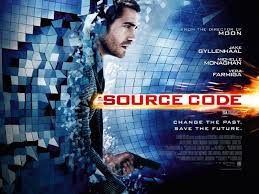


This was an unexpected little gem of a movie I had no expectations of but turned out to be really rather good. A man is projected back for a very limited time to try and discover who planted a catastrophic bomb on a commuter train in order to get him back in time one final occasion to prevent it. Each time he eliminates another suspect, only partly diverted by his attraction to a woman, who like everyone else will die if he doesn't find the bomber.

One of those films about returning to the same moment each time and trying to alter its outcome, of which there are several

Terry Gilliam has possibly the best visual imagination of any film-maker, but he lacks the restraint always to harness it completely. This film being early in his career meant he was reasonably reined in and it's a cracking film, visually beautiful, funny and endearing as a schoolboy travels back to various historical eras and meets denizens like Napoleon, Agamemnon and Robin Hood (John Cleese playing himself playing Robin Hood, very funny). Utterly charming. I haven't seen it in an age, I need to watch it again methinks.


Early on in the movie, a character tells us not to even try and work out the logical paradoxes of time travel and the film accordingly makes no effort to justify its own internal logic. Thus it becomes an empty exercise in style to my mind. It does look great, but is completely unsatisfying and forgettable the moment your cinema seat tips upright and you stand up on the spilled popcorn.


Do you know I've never seen any of the films in the BTTF franchise? Must be the only person in the Western World. No particular reason, just never sat down to watch them even on TV. Don't know, may be a bit too Oedipal for me!


This is one great movie, (oh look it's Terry Gilliam again) splitting between two epochs, as Bruce Willis' character from a dystopian future is sent back to try and secure a sample of the deadly virus that forces mankind underground in his own time. But then I saw the original French short film "La Jetée" on which "12 Monkeys" is based and it just blew me away. it has more profound things to say about time travel and meeting yourself in the past and future than most films. And it's a silent film largely told in stills. Amazing.


On first viewing, a clever film about being utterly stuck in time, forced to repeat the same day over and over again. But on second watching it didn't stand up quite so well. I guess it only worked when you didn't know what was coming next, but once seen through, wasn't worth a return visit. Bit like a Ghost Train ride, or "Being John Malcovich"


Woody Allen hadn't made a decent film in years (in this humble critic's opinion). But this evidenced a return to form as Owen Wilson's character travels back temporally but not spatially to the Paris of Hemingway, Fitzgerald, Cocteau, Toklas and the giants of Modernism who inhabited Paris in the 1920s. One of those speculative films about what it might be like meeting great historical figures, this time artists rather than politicians in power. It was so engaging, one could even forgive the unfortunate self-indulgences of the self-involved middling writing that Wilson's character was made to be by Allen.

I hadn't read the book of this, so when I finally saw it recently on TV for the first time, I don't know how far it sticks or deviates from the novel. But I thought the film at least was terrible. The logic of him appearing and disappearing and turning up in different times seemed completely unanchored, while its build up was merely to a great big (little) fizzle of an ending. It's curious that as with "Terminator" time travel doesn't have an effect on flesh (or metal), but you can't take your clothes with you so end up naked at the end of the journey through time.


How can you not love a film that takes liberties with everything it touches, plus has Joss Ackland as the baddie? Not a serious contender for one of the great time travelling movies, but good fun all the same. Whatever happened to Alex Winter?

Sunday, 24 February 2013

Sunday Sample - The Pub!

What might life be like if you came from a world where the public house drinkery did not exist? If you'd had no exposure to pub mores around the dartboard, the jukebox or even the male toilets? If you'd never been exposed to the chill threat of having to make your exit past the killing ground of the pub car park?

Such a situation faces the main character from the comic scifi time travelling novel "Time After Time". He is from the future, a future where women hold sway and alcohol and violence are both unknown to the males of that society. Unknown, but reputed...

Here is a section of the novel where the assassin travelling back from the future encounters his first pub in the present.


She grabbed his hand and wrenched him forward. The involuntary jolt made him bite his tongue. She stayed behind the end lean-to and extended her head to take a peek out. F-10 tentatively brought two fingers to his wounded glossa.
"That's it, I think they've got bored and left us alone now. Thank heavens for poor attention spans."
"Um?" he said distractedly and with his fingers still in his mouth. She stared at him, trying to evaluate whether she was about to hop from a skillet into a wok. Well that's what aspirational TV cookery programmes could do to a person's terms of reference. She straightened her coat as best she could with one hand and marched them out of the refuse area holding his wrist with her other.
When his tongue had lost some of its tenderness, he inquired as to where they were heading. It was more a vague conversational gambit to test out his wounded organ, rather than providing information for the machinations of his brain to advance a plan for killing her. Everything all in good time. And now was not a good time. Head bowed, he trailed behind her as if he were her dog being walked.
"The pub of course!"
The pub? Was he at last going to experience one of these legendary mystical temples to the cult of man in the flesh? Well, in the bricks and mortar? He swallowed hard. He knew they were places of consecrated holy violence. Seeing what he had already experienced, he could scarce begin to imagine what that might encompass. Apparently the 'car park' was the holy sanctum where the highest rites of orgiastic violence kicked off after the other ceremonials had concluded.
"... Thanks by the way."
"Um, what for?"
"For being in the wrong place at the wrong time!" He looked nonplussed at her as she flashed him a wry smile. "My name's Hayley by the way."
Bingo! It truly was her. What were the chances? Whatever they were, Jolly had calculated them to a remarkable accuracy, so respect was due to him for that. He was so happy he could pass out. Which given the current disposition of various parts of his anatomy, he might have been on the threshold of anyway. But no, he was this close to securing the success of his mission. He had to gather himself. No longer the hangdog expression on his face, he gambolled up to fall in step with Hayley by her side. She responded by gripping him closer, so that their shoulders were touching. A bitter little grin broke across her countenance.
"Insane isn't it, having to run the gauntlet every time you want to go out for a drink? Didn't even want one when I set out from home, but I bloody well need one now. You look as though you do too-"
"-Just... you're cutting off the circulation in my arm!"
"What? Oh sorry!" She released her grip and his numb arm flopped down by his side. He started shaking it to try and get the blood flowing again. It looked like he was trying to throw some robotic dance shapes. She looked at him incredulously, but was beyond forming judgements without the prejudicial prod and warp of alcohol.
"Here we go. Our temporary oasis. Should be relatively peaceful this early in the morning. Thank god for all day opening hours eh?"
He looked up. A squat building sat behind a wire mesh fence. Its once white walls had been almost completely obliterated by graffiti and an enormous sooty scorch mark beneath a boarded up window. The rest of the windows were behind thick steel grilles. There was razor wire along the low slung roof, interspersed with embedded broken glass that was catching the sun as it was beginning to break through the clouds. For a temple, it certainly didn't seem very welcoming of a congregation.
"Looks like the last building left in a city siege doesn't it?" offered Hayley dispassionately. "If the aliens ever landed here as their first taste of Earth, they'd head right on out into the Cosmos again and who could blame them? Well, come on in. I’ll stand you a drink. It’s the least I can do... So, what’s yours then?"
      Alcohol, he was actually going to get to taste the forbidden nectar that was alcohol. He looked around the bar for a menu on any of the tables. None was forthcoming. He did nonetheless, remark that the tables and accompanying stools appeared to be chained to one another and the chain tethered to the floor. "Er, whatever you're having."


Wednesday, 30 January 2013

Gladioli All Over - The Smiths & My Novel


This week I'll be doing one-a day posts about songs included in my latest novel "Time After Time", how the music fits into the narrative and where the band or the song fitted into my life.


Today's is The Smiths "This Charming Man". It's a big deal for me to host The Smiths on my blog because they were a band I really didn't like for the reasons below. But the book demanded a tune for a guy being picked up on his smooth operating by a lady and well, this fit the best.


"You one of those 'new men' we always used to hear about?"

"You could say that."
"Same as the old men and the 'new lads' if you ask me. 'Metrosexuals'? The clue is in the 'sexual'..."

Okay, so why don't I like The Smiths?

1) I had the misfortune to see them early in their career when they were already being touted as the next big Indie band. They were supporting The Fall who were on the same Rough Trade label at the time. What the upstart Smiths didn't figure is that this was Mark E Smith, main man of The Fall, putting them in their place, playing off their name to make it seem that they were his house band. Anyway, I have poor eyesight and moshpits are not great for geeks with glasses. So in my long past gigging days, I used to get as close to the stage as possible in order to facilitate some minimal level of vision without my specs. To ensure my space at the front, it meant I had to stand through some pretty terrible support bands in my time (and to be fair a sprinkling of real gems). Hence I'm stood there waiting for The Smiths to take the stage, my arms crossed in as hostile an 'entertain me then' manner as I can summon. As per the video above, because it was his Oscar Wilde meets Dame Edna Everage schtick, Morrisey comes on stage with a bunch of gladioli and in the first song brings the flowers down on the heads of the audience. That's us up against the stage and the pollen sets off a raging, most unseasonal hay fever in me that fills my eyes with water so that I view the Fall's set through a veil. 

2) Manchester is the home of UK music. Liverpool has produced little music of note since the Beatles and London has surprisingly few of its own indigenous bands, though plenty flock from the provinces to take up residence in the capital. Sheffield has occasional flare ups of interesting bands, but nothing quite so sustained as manchester as to make it the rock and roll capital of the UK. If you don't believe me about Manchester, here are some of its musical alumni: Joy Division/New Order, Stone Roses, Happy Mondays, Buzzcocks/Magazine, The Fall, 808 State, Autechre, The Bee Gees (!), The Chemical Brothers,  The Hollies, Herman's Hermits, Freddie And The Dreamers, John Mayall, The Verve and Oasis. Now Manchester transmits an image of itself through its music. And that image involves a certain chippyness and cussedness to all things London. It's hard, gruff and irreverent. And then along came The Smiths and almost single handedly undid all the sterling work of the bands from the late 1970s and very early 80s with their rather fey adoption of the trope of Oscar Wilde. Of course I acknowledge that in time The Smiths turned out to be more popular than maybe any of these bands, (other than Oasis, but don't get me started on those Merseysound wannabees!) or at least comparable. But some of us weren't comfortable with what that meant for Manchester...

3) When I was at university, all the cool alternative blokes (of which I liked to consider myself as one, okay maybe without the cool), were desperately casting around for a new band to follow after Ian Curtis of Joy Division killed himself and the remnants of the band turned into dance-pop New Order which was overtly beyond the pale even though we all secretly loved them and indeed the only time I ever saw them play live was at a University Ball in my final year. Anyhoo, Joy Division fans wore long trenchcoats and needed a band that enabled to continue doing so. For some reason, despite the iconography of gladioli and dear Oscar. lead singer Morrisey's misery warbling green lit the trenchcoat brigade permission to carry on moodying in their long outerwear. So I spent many a university party with the girlfriends of the cool set as the only male present, commiserating about how their boyfriends were off away at a smiths concert, or refused to dance with them because the party music was not 'right'. Actually there were some fringe benefits from this, but you take my main point I hope. Being into the Smiths meant the normal subject matter of teenage boy meets teenage girl was strictly off the agenda. The boys preferred moping alone in the attic rooms or halls of residence. The girls just looked bemused and began to consider the virtues of relationships with would be yuppies or geeks. That's not what rock and roll is about. It's not even what pop music is about!

So that's why it's a big deal even after all these years for me to host a Smiths' video on my blog. But fair's fair, the song is in my novel, even if it is associated with the anti-hero!

Tuesday, 29 January 2013

Look Who's Stalking

This week I'll be doing one-a day posts about songs included in my latest novel "Time After Time", how the music fits into the narrative and where the band or the song fitted into my life.


The first is "A Figure Walks" by The Fall. This song announced itself very early on in the process of writing the novel during a comic stalking/pursuit scene I was writing. The assassin has finally sighted his target and starts following her, while he himself is being pursued by a gang of youths with murderous intent in their eyes at this outsider to their estate. The drumming and bassline are suitably menacing for that horrible feeling that you're being followed, but don't dare turn round and engage their eyes...


"Is he following me? Can't be!... He is! Matching me step for step. Oh god, now you've done it girl. You and your big mouth. They got websites full of that sort of thing. Pregnant is the new virginity in the sicko stakes... Don't... turn... around. Keep walking. Don't break into a run. Just look straight ahead. Clenched fists and tight buttocks. Just wants to put the wind up you a little... and he's succeeding... well, cross the road then you bastard! Oh god, sounds like there's a whole pack of them now."

Ah The Fall. Probably the band I saw play live more than any other. They used to play absolute toilets of venues as per Mark E Smith's legendary perversity. I saw them a few times at a North London Polytechnic, in the days when they were still called that rather than Universities. It wasn't even a campus, just some Hall owned by or attached to the Polytechnic. We were all sat there on the pavement waiting for the doors to open, when Marc Riley, erstwhile Fall guitarist (before a vicious falling out with Smith so that the latter changed the lyrics to a song and baited Riley from the stage at a later gig I attended) and the man who would later be known as "Lard" as Radio ! DJ Mark Radcliffe's sidekick, anyway that same Marc Riley approached us from the shops on Holloway Road with his placcy bag sagging under the modest weight of what looked like a fourpack of convenience store beer. No fancy riders backstage for The Fall as Riley cut a path through our outstretched arms and legs on the concrete. No one bothered to salute or even greet him, for that was The Fall and their fans. Unrock and roll as you could get.

I once saw them in February, when they played a set of unfamiliar songs as was their wont. These songs then turned up on the new album released a week later, so fair enough you think, they were showcasing the new album just ahead of time. Then having worn the vinyl out playing that album and committing every song to the pith and fibre of my body, I was ready to belt out the anthems full voce when they returned to the same venue a month later... Only for them to unfurl a completely new set of yet more unfamiliar songs that would later go on to form their next album. Not for The Fall to bother plugging an album less than a month old! And that cussedness towards the record business endeared them in our hearts forever I would suggest.

Sunday, 11 November 2012

More Songs About Time

After my chart of 10 songs about time in honour of my latest kindle novel, here are some more, specifically about the time marked on clocks.

1) U2 - "11 o'Clock Tick Tock"
The only U2 song I ever liked, with that guitar riff that sort of shuffles you along. This is my U2 story; I went to see them in the early days as they happened to be the support band to Belfast punkers Stiff Little Fingers. A lifeboat had sunk the week before killing the crew and U2 fans were collecting money at the venue for the bereaved. They weren't getting a lot of joy from the punkers who just stomped on past them, when one of them snapped and yelled, "I hope you don't get caught out at sea with your trousers down pal". Rather uncharitable for a supposed Christian fanbase I thought to myself... Also in the present climate, could U2 get away with the cover of their debut album "Boy"? Probably not I feel.


2) The Stranglers - "5 Minutes"
Okay this post has turned snarky already (what did I expect launching off with U2?). So what dirt can I give you on The Stranglers? Well allegedly 3 of the 4 founder members were all draft dodgers from their respective countries of Sweden, France and er England? That would make Hugh Cornwell in his 40s in the 1070's which I'm dubious about. Another scurrilous rumour was that bassist JJ Burnel couldn't play his instrument and that keyboardist Dave Greenfield played all his basslines for him through his synths...


3) The Jam - In The Midnight Hour"
A cover version of a Wilson Pickett song. It's hard to be snarky about The Jam, beyond the they're too sharply dressed like Mods to be considered punks, yet their sustained Chart success with songs that were very critical of the Conservative Government of the day was quite an achievement where other art forms either failed to address the political issues, or just couldn't draw any kind of significant audience. They were the band I saw live most until I got into The Fall. So sorry, no snark.


4) Pere Ubu - "30 Seconds Over Tokyo"
Pere Ubu were one of those New Wave art-punk bands from New York in the late 70s. Their music was fabby, but they were totally impermeable to fans and journalists alike. Not to say cussed. This from the Wikipedia entry: "Pere Ubu have compiled a list of guidelines for touring, live performances and the like: "Lighting should be theatrical rather than rockist. We are interested in atmosphere, mood, drama, energy, subtlety, imagination—not rock cliché." 


5) Joy Division - "24 Hours"
Now followers of this blog will doubtless know that Joy Division are my all time favourite band, (just click on label tags on Joy Division to see that in effect) so I won't write a bad word against them. This was a track on the album that didn't even have a chance to be released before lead singer Ian Curtis committed suicide. "A cloud hangs over me/ Marks every move/ Deep in the memory/ Of what once was love." Ughh...


6) Spacemen 3 - "2:35"
I love Spacemen 3 even though I am virulently against drug use to stimulate creativity. One has to acknowledge that maybe within the art form that is music, drug taking can yield some great art. This is about waiting desperately for your next hit, but time is marching on. When I was at College, my friends and I discussed who would be the next rock and roll fatality. Sonic Boom of Spacemen 3 and funnily enough Hugh Cornwell of The Stranglers (see above) who penned the ode to heroin that is "Golden Brown", were our prime candidates. But both I am happy to report, are alive and kicking and still making music. Although not with their old bandmates...


7) Cabaret Voltaire - "Seconds Too Late"
So you're in Sheffield and you can have The Human League, or you can have Cabaret Voltaire. But you can't have both... Deeply unsettling I think you'll agree? Way ahead of the field in Dub, Electronica, Industrial, Techno and House. And unlike the band Coil, they didn't write advertising jingles on the side to make money.


8) Blondie - "11:59"
We're not allowed to be rude about Blondie are we? Especially not that she started her professional life as a Go-Go dancer and Playboy Bunny? That this punk icon started her music career in a 60s folk band. She also claims in interviews to have been lured into serial killer Ted Bundy's car, though this claim has been denied by critics who say there is no evidence for Bundy ever having been in The Big Apple.


9) David Bowie - "5 Years"
There's an awful lot you could say about Bowie, not least his "Thin White Duke" iconography with its undertones (overtones?) of Fascism. But an audit of his musical output is maybe what we should stick to and in my humble opinion, there was just 1 great album, which is of course Ziggy Stardust from which this track is the opening track on that album, plus a meagre sprinkling of a few other good songs dotted around here and there. The "Laughing Gnome" is not one of those however...


10) The Specials - "Friday Night, Saturday Morning"
And I simply won't hear a bad word said against The Specials. From an era when music was socially relevant...


11) The Cure - "10:15 Saturday Night"
How did they go from this, three schoolboys from Crawley, to the bloated Goth king who had an imaginary friend who talked to him? I think the answer has to be the pressures of fame and bad drugs/alcohol. This damn song was only ever a B-side, yet still knocks the socks off most of the output of their contemporaries. Then the drummer tried to sue the other two for a share of the writing royalties. He lost...


Tuesday, 23 October 2012

My writing Debt To Theatre


In a strange way, theatre probably fired me into picking up my own pen (as the technology then was!) But only out of irritation with what I had seen up on stage.

Late 1970, early 80s Britain, new plays were dominated by a fistful of Marxist and Left-Wing dramatists such as David Hare, Howard Brenton, David Edgar, Trevor Griffiths. The politics tended to come first, the characters lagging behind a poor second, as each one represented a 'position'. It was Hare's "A Map Of The World" which so provoked my ire as to make me credit I could do better at the tender age of 19.

Playwriting seemed like a decent career to try and get into, since in the late 1970s drama was flourishing and vital, both in the theatre and on television where Dennis Potter and Stephen Poliakoff were writing challenging stuff and bringing it into people's living rooms and new writers were getting exposure on BBC's "Play For Today" slot. Plays were contributing to the political debate of the time, Potter's "Brimstone And Treacle" provoking fevered national debate as to both its taste and its actual meaning.

But while I was at University from 1983 onwards and availing myself of student thespians and free stage spaces trying to learn my craft, something happened to British theatre. The Left-Wing playwrights tried to do battle with the prevailing Conservative politics of Mrs Thatcher's government and lost; both artistically where they never managed to successfully counter her ideas and economically as Mrs Thatcher had the last laugh by demanding that the Arts had to be financially self-sufficient and severely cut the funding across the board of theatres. The BBC stopped producing "Play For Today" as the mass appeal of the soap opera began to dominate TV drama output. Playwrights didn't hang around the theatres very long, partly because it no longer offered decent rewards. Any playwright with a minor hit under their belt, soon jumped ship to TV or film screenplay writing where the money was.

I wrote stage plays for ten years after college. Not with any commercial success I have to say. Mainly produced in pub fringe theatres. But what I learned in doing so has been formative in my novel writing today. Firstly and least surprisingly, you learn how to write dialogue. Since that's pretty much all you have to play with as a playwright, Directors not liking their hands tied by too much suggested stage direction from the writer. But playwriting also asks the writer to think visually, with a limited tableau of stage scenery and props, so that you develop an ability to conjure images through the interplay of the spoken word and what has gone before. A key word that becomes motif, such as Chekhov's "Cherry Orchard" or the Christmas tree in "The Doll's House".

Actors too shape the space they move and work in with their bodies and gestural language. I was privileged to attend all the rehearsals of my work and see actors doing just this. Shaping an empty space gives the writer a real insight into making images out of thin air, the relationship of a physical body in space to the emotions and the words the actor utters. This can only help a writer literally conjure images out of thin air, by thinking about the interplay of these four elements. I also got to see the creative powers of directors and set designers at work.

But watching actors rehearse, particularly in the early part of the process, opens your eyes up to another key element, that of relationship. Unless the play is a monologue, it is full of relationships being portrayed on stage. Relationships that have to be established in rehearsals; between actors who may never have met one another until they first step into the rehearsal space; relationships to their own character as they try and 'find' that character, as written by the author and to be interpreted by them and then further rolled out to find the relationships between the character and to realise them from the page of the script. There is nothing quite as fascinating as seeing these processes at work. And key to relationship in acting and I think to writing them in prose, is to think about power and status. A common acting exercise is to ask a pair of actors improvise a simple given scenario and then throughout to change their relative statuses to one another by barking out a number, where 10 is the highest status and 1 the lowest. Watch how the same scenario takes on countless different forms just by changing the power balance between the two characters. I find this an invaluable tool for when I'm writing a prose scene with two or more characters. Which character can't hold the gaze of the other, or which is flexing their fingers subconsciously... the possibilities are endless.

So theatre writing armed me with several tools for prose writing, because you always had to consider the characters on stage at any and every moment. You were forced to write fully rounded characters and how they related to one another. You were also made to think about how to construct layered images and motifs. All things at the core of writing prose.

My new novel "Time After Time" actually begun life as a stage play I'd written. The same man, the same woman, the same opening chat-up line and a myriad of different outcomes from this scenario. Tiny fluctuations in body language, a word heard in one version, but not in the next, each can contribute to a different outcome of the seduction scenario. Not dissimilar I suppose from the status impro games actors use to find their characters. But I wanted to use such a mechanism to look at how emotions can produce different responses to the same set of events and circumstances.


Saturday, 20 October 2012

10 Songs About Time

My new novel "Time After Time" already has its own playlist of songs that soundtrack the action. But here is a chart of songs directly about time for your delectation:

1) Pink Floyd - "Time"
Possibly the most famous song about time, from the meg-selling "Dark Side Of The Moon" album. Pink Floyd were the first ban i properly got into in the sense of wanting to chase down every single recording they had ever made. That sort of collector-worship boys are eminently susceptible to. However, once punk rock came along, the tempo of Floyd's music was just to slow for my ears craving souped up rhythms. So this was time undermined by too slow a passage of time in the end...


2) The Doors - "Love Me Two Times"
The Doors were one of the few 60s band I can listen to.  I don't particularly buy into the Jim Morrison mythic status thing, and in this video it's a tad irritating that you have to wait until he stops burbling about a minute and a half in before the song starts, but it's a good'un when it does arrive.


3) MGMT - "Time To Pretend"
It's perhaps ironic that the vocal and music of this song actually do suggest the 1960s in a song full of yearning and hearking back to a more innocent age.  When this song came out in the Noughties, it was heard absolutely everywhere. But with good reason I feel.


4) Beastie Boys - "Time For Livin'"
It's not quite the momentous act of Bob Dylan plugging his guitar into an amp, but when the Beastie Boys didn't rely on samples quite as much and picked up their own instruments and returned to their punk roots, it gave all their subsequent albums a huge diversity of punk, hip-hop, rap and reggae. And I loved them for that.


5) Depeche Mode - "Question Of Time"
I was never a big fan of Depeche Mode, but the music in my novel covers virtually every style, so continuing that here in my "Time" chart, I give this a platform and let you dear reader/listener decide.


6) MosDef - "Life In Marvellous Times"
This is just such a superior song, that builds and builds and has unbelievable tension that never quite peaks. Masterful.


7) Cyndi Lauper - "Time After Time"
I've never been a fan of chart pop tunes, but while I was writing the novel and I'm not sure how, but this song presented itself to me. Of course I recognised it from the dim and distant past, because that's how ubiquitous chart songs are, you just can't avoid hearing them and how insidiously they permeate our brains. But as it goes, this song not only fitted my novel, but the fit was so perfect that it went on to become its title. And I seem to remember we always accredited Cindi Lauper some credit for being slightly subversive in her attack on pop music. maybe we were fooling ourselves. A bit light for my tastes, but I can see it's a well crafted song.


8) Funkadelic - "Everybody's Going To Make It This Time"
I do love my funk and George Clinton's cosmic madness. Yet this is a rather wistful political song about past failures and a hope that this time round there will be no casualties in the various fights for rights and freedoms.


9) Portishead - "Sour Times"
I suppose songs about time that either look back or look ahead, are prone to being melancholic, chockfull of regret or despairing hope. And this is one of those as Beth Gibbons puts a whole lifetime of emotion into her singing, while the arrangement rattles along reedily as if to suggest time's flimsiness itself. There's a different Portishead song referred to in the novel.


10) Misty In Roots - "How Long Jah"
Roots reggae's gorgeous, simple appeal to how long must they wait for the Messiah? An eternity it seems. An eternity of pain and suffering...


Thursday, 18 October 2012

SlipMatt - Friday Flash


this is an 800 word extract from my new novel "Time After Time"


Even when not armed with a pictorial pocket guide to the urban archetype, you could still tell he was a DJ. He had one hand clamping a headphone can against his ear as if it were a conch shell and he was divining for an ocean of sound through it. He also had a pair of light-up rave glasses, which in his case was a double affectation. Seeing as he had an angle-poise lamp, well, poised over his shoulder. Plus that the battery in his specs had long expired, though he either hadn't noticed or just couldn't spare the time to change it over. In contrast to his changing the records on twin turntables in a blur of motion.
Though effaced behind the decks, console and transmitter rig in his bedroom, his T-Shirt was of a full-sized twin-tape reel and assorted dials, buttons and analogue gauges, picked out in metallic silver against a black background. It looked like the innards of a cyborg and more alarmingly perhaps, in the dull, spectral light of the room, that they formed part of his own actual anatomy. Around his neck was a bandana, while on his head squatted a baseball cap at an incline that defied gravity.
It was said by those who caught rare glimpses of him, that it must have been the static electricity that surrounded him all day which held the hat fastened in place. It bore the imperative 'No Requests'. However, since the cap was perched backwards on his head, in the unlikelihood someone did advance upon him armed with a musical request, the pre-emptive prohibition wouldn't be visible to them. Therefore the headwear's broadcast could only fail in its purpose. But then the whole rigmarole was perhaps somewhat redundant. By reason of there being no one else in his box room. And, that given its dimensions, nor was there likely to be. Any self-respecting turntablists had played clubs with bigger DJ booths than this room. But then it was questionable how much self-respect DJ SlipMatt possessed.
The wall mounted clock was in the shape of a record turntable, the numbers marked along its circumference. The clockface dial was what revolved, whereas its hand in the form of a tonearm stayed fixed in place. Armed with just this one pointer, the clock only counted off the hours. Which was somewhat odd for a DJ reliant on getting his split second timing right as he transferred from one deck to another, or mixed in a beat.
He adjusted the angle-poise lamp so that its glare didn't flood wash his bank of monitor screens. The hacked feed from all the CCTV cameras on the estate fed into here. He clicked the bulging eyeball sat in a bloodshot sclera that was his computer mouse, in order to change the selection of cameras on his screen. Instantaneously the grid filled with sixteen new images at different slants of projection, like a Cubist painting. SlipMatt silently pronounced himself content with what he witnessed and slotted the headphones over both ears, with the headband hanging down from the back of his neck like a yoke. He started bobbing his head to the private rhythms, as he scrabbled around on the desk in front of him for something.
The room itself was a garret beneath sloping eaves which ate into the habitable space. SlipMatt could only properly stand up in the very centre. Otherwise he had to hunch over. Which seldom presented any impediment, since his natural bearing was sat stooped over the electrical equipment on his desk, as if he were hoarding it into his chest. Every single square inch of flat space was submerged beneath some electrical kit or other. CDs, cassette tapes, Dictaphones, Discmans, Walkmans, mobile phones, pagers, mini-discs, cartridges, DAT tapes, spools of magnetic tape, hard drives, RAM memory, flash memory, microphones, microphone stands, cabling and a wide array of batteries of every shape and size. The embodied history of sound recording lay mummified yet uncatalogued here. If Noah's Ark had preserved the length and breadth of the animal kingdom on earth, this room was its audio equivalent. Only none of these voices were ever likely to re-emerge into the light of day, consigned to the depths by the obsolescence of their storage vessels. Some people retain their teddy bears or significant other soft toys as a link to their childhoods. Some of those teddy bears are so old they have their cotton stuffing leaking out. Electrical audio equipment were SlipMatt's cuddly toys, his transitional objects and many had their tape or other innards leaching out of them.


For more on the novel: The Origins lie in "The Terminator" movies or 

The website for "Time After Time"

Genesis of "Time After Time"


I love the "Terminator" movie series (apart from "Terminator 4"). Schwarzenegger makes the perfect machine with his sculpted body and wooden facial acting. Linda Hamilton's Sarah Connor is truly a warrior female, who will do anything to protect her future progeny.

But there was always something that bugged me about the films' concept. Actually there were two, but the second would serve as a spoiler for my own novel so I'm not going to discuss that here. It's the other bugbear I have with the movies that became the starting point for me when I was thinking about my novel "Time After Time". In fact it even lies behind the novel's title.


In "Terminator 1"a cyborg assassin is sent back through time to kill Sarah Connor to prevent her giving birth to her son that will become the future leader of the resistance to the rule of the machines. The Resistance also manage to send one of their top men Kyle Reese back to protect her. This is where the human brain goes into meltdown, trying to pick all the logical flaws and frays that accompany these assumptions.

Let's say the terminator is successful in his mission and kills Sarah Connor so she never gives birth to her son. The future therefore ineluctably proceeds on to the triumph of the machines and the extinction of the human race. Then what happens/happened to that version of the future where the machines were so up against the rack against the resistance that they needed to send back a Terminator to kill Sarah Connor? It happened in the narrative once, so it can't be uninvented. Yet the future now has no John Connor and no potent human resistance.

Second, Reese comes back and not only protects sarah Connor, but both impregnates her and dies in the earth of the past in the line of fire. So John Connor makes it to the future, but with the DNA of a father who should be one of his troops in the Resistance  and indeed in one version of history was, but yet Reese died back in the past and didn't ever make it back to the future to take up his 'normal' place in the timeline. How can he have been sent back from the future when he's already died in the past and not lived to make it into the future in the first place? Presumably time splits between two versions here, but I'll pick this up a bit later. Also, before Reese was sent back, he is fighting alongside John Connor. Yet that John Connor should not even be alive, since it is only Reese going back in time and making Connor's mother pregnant that gives life to John Connor in the first place...

The usual logical way round these paradoxes is to suggest that time is not singular, but that there are many versions of reality, with differing outcomes and narratives. These are often referred to as parallel universes and are tied into Quantum theory to explain the differing probable and possible outcomes even from the same set of circumstances. Reese says that the current reality he and Sarah are embroiled in with its implications for the future, "one possible future", but then feebly proffers that as he "doesn't know tech stuff" he can't explain it in any more detail. Well parallel universes only get us so far.

So there are many possible futures and even possible veering off of the present. In some versions the Terminator will be successful and the machines will rule the future. In other versions Reese and Sarah foil the Terminator and John goes on to lead the Resistance to victory over the machines. In a coiling of time back on itself, the strange goings on of Reese siring John or Reese dying in the past before he can return to the future to be sent back to the past are just bumped over into the next version in an infinite loop. But then if the machines win some futures and the humans win others, what does it matter? You have a chance to live in the future where man prevails, or you are unlucky and end up in one of the timelines where you become extinct. But both exist. Just hope and pray you end up in a lucky timeline. But it means the human race can never be wiped out, because in some realities it persists. Equally mankind cannot ever fully extirpate the machines, because elsewhere in a parallel universe they still rule the roost. Parallel realities show the entire spectrum of outcomes, they can never lead to a single, ultimate one.

Hence the title of the book, "Time After Time". I do try and deal with these paradoxes of time and make clear that my assassin's mission has to be successful in every version of reality, for him to wipe out the presence of the 'mother of the future' from ever existing. But chance, different timings and the like mean that there will always be other outcomes of his mission, that it can never yield the same result time after time after time.

What my book does, is draw a parallel between the mission of getting up close to  a stranger in order to assassinate them, and getting up close to seduce them. The same variables of timings, chance, circumstance, missed signals, misread signals and the like all impact on the outcome. The book is less about assassination, but more about the countless number of outcomes when a man and a woman are in the same place, at the same time and trying to get close to one another. And the humour derived from the tiny differences that can alter the outcome so radically. I also draw lightly on "The Butterfly Effect" from Chaos Theory, which can be summarised as the mere flapping of a butterfly's wings can change a whole weather pattern the other side of the world through a linked change of circumstances that build up on the back of that one tiny event. Again, I feed this principle into that panoply of words and signs a man and women display during the initial time of their suit.

And finally we return to the concept of time and its paradoxes. Time is just a human concept that helps us to pattern our perceptions (night/day, the seasons, shadows, the planets etc). It has no existence beyond our conscious mind. The Big Bang theories state that there was no Time before the Big Bang and that it only came into being at that point. Matter came into being and started moving away from the Big Bang explosion, travelling through space at a velocity measured in time and also that the material of planets started to age from that point on. Einstein came along and actually merged time with space to form our fourth dimension of spacetime, an oblique concept for most of us who can only conceive of things in three dimensions because that is how our minds have been taught to perceive and it's a good enough method for us to negotiate our way not only through life, but to be able to send rockets to explore planetary bodies beyond our atmosphere. But it it is this fourth dimension of spacetime, or any fourth dimension of conceptualising matter (as offered by recent theories like String Theory or multiverses) and our brains start to malfunction and logic breaks down, because we simply don't have the mental apparatus to be able to think in four or more dimensions. And it is in these failings in our perceptual and conceptual apparatus that allow the paradoxes of time travel to remain unsolved and to stay at the heart of films like "The Terminator" and books like "Time After Time". As Sarah Connor says towards the end of "T1" "a person could go crazy thinking about all this stuff". Did I already mention that I love the "Termiantor" film series?


Available From Amazon Kindle