Showing posts with label Novels. Show all posts

Monday, 6 August 2018

Sacrificing Children On The Altar Of Literature


The two questions any author gets asked the most, are ‘where do your ideas come from?’ and ‘do you use real life people for your characters?’. If the answer to the latter is yes, the follow up question, is ‘do they know?’

The child psychologist Jean Piaget drew up his theories partly through observation of his own children. Sigmund Freud psychoanalysed his daughter Anna and though anonymised, she was the case study for “A Child Is Being Beaten” published in 1919. Neither author was challenged at the time over any questionable ethics, though some of Freud’s modern critics have since rounded on him, not just for the ultimate in Oedipal/Electra Complexes concerning his own daughter, but accusations of virtual incest through opening up her deepest intimacies on the analysand’s couch. 

Both authors would have likely offered up scientific method in any putative defence. However, fiction authors have no such recourse when frequently asked whether we base our characters on real life people. And while our attempts at anonymising (through fictionalising), may just about get us through condemnation for identity theft and lack of consent, when children are used for material that is feasibly an invasion of privacy too far.

I knew I wanted to become a parent, through observing my own childhood as a singleton with a certain dissatisfaction and some resolutions on how I might do it differently.  I was an observer by nature and writing seemed well suited to such a temperament. I started writing stage plays, but when my twin boys arrived. I switched to late night novel-writing since I could no longer devote the time hanging out at theatre bars networking. My early novels barely mentioned children, but now that my sons have attained the age of majority and fledged from home by attending university, I've turned my literary observations to writing about parenting and children. In doing so, have I betrayed their privacy?

The comedian Stewart Lee had a routine about now that he was a parent, his entire life was in service to his children, driving them around to play dates or watching kids’ movies with them, so that he had no real life material to draw on to create a new comedy routine (which of course he adroitly subverts by offering up plenty of comic evidence, eliding Scooby Doo with the political woes of our nation). When you become a parent, one of the things it does is prompt memories of your own childhood in offering perhaps a ready reference to apply to that of rearing your own children. But I had already covered this happenstance through my own reflections that had fed into my desire to become a father in the first place. I may not have always prefigured my parenting actions correctly, but I wasn’t taken by surprise. So the first childhood experiences I offered up to the altar of literature were actually my own. Not quite the scientific method of Piaget and Freud, but I do probably hold the intellectual and emotional rights over my own experiences.

But such content was not enlisted in isolation. There was an echo with the more recent layerings provided by having my own children. But a good deal of what I put into the novel were certain universals about children and in particular child development, rather than details that would identify and out my children as the raw material of the book. Piaget outlined developmental stages which all children go through as their brains mature and although his timeline for such phases has been challenged, the principle remains generally accepted. The same in my book, that language really only enters the picture once the child is able to take on solids through the resultant change in the anatomy of the throat. How we then gain words through imitation long before we know how they are spelled, before we acquire knowledge of the alphabet and the school-borne struggles of mastering the stroke of our pencil to write our letters. From these universals I could proceed to consider how we all acquire our personal forms of self-expression, how much it stems from our parents and how much it deviates as we are able to individuate ourselves. I don’t credit I am betraying any confidences in sharing some observations on these developments. Indeed, one of the arts of novel writing is to make its themes universal enough to speak to a wide diversity of readers. A novel that remains subjective to the experiences of the author is far more likely to fail to communicate. 

In real life I have twin boys. In my novel the protagonist mother has two girls. So my experiences standing on the touchline managing my twin’s Under-9s football team to an FA Fair Play Award couldn’t feed into the novel. However, the overweening ambition of some of the other parents stood there on the touchline screaming at their scions, did inform the novel’s contemplation of the hazy line between a child’s individuation and the parent’s overlaying of it with their own projections for the child, rooted in the parent’s own neediness or unfulfilled dreams.

I also have scenes set in the nursery school playground, but again the mother of girls demands a different depiction than my actual experiences of a father waiting to collect his boys at going home time. Though the playground politics of who talks to who and who shuns who, is likely a universal scenario, standing as a man huddling close to the smattering of other fathers among the preponderant women does ineffably change the dynamics. So while the portrayal of the fictional mother’s isolation reflected my own, I’m happy to report that the by extension isolation of her child, did not reflect the true status of my own twins who were perfectly blended into the social scene of the kids at their school. My fictional mother doesn’t even have the consolation I managed to utilise, of quietly imagining that I would assuredly be in possession of the best record collection of any parent stood in the playground, seeing as I worked in an independent record shop at the time. See, one doesn’t require the direct experiences of one’s own children to get into an infantile mind, one just probe’s one’s own stock of such behaviours.

Further novelistic reflections of pester power in the supermarket, or of the end of service for a teaching toy as all its peripherals are finally and unutterably lost, each represent my reflections looking back on similar incidents; they happened while bringing up my twins, but again there are dual refracting lenses, me as a father casting back to when I was a child so that the outcomes written about is a new synthesis, neither truly representing my childhood nor that of my twins. The choking on a raisin never to the best of my knowledge afflicted either of my boys, while the panic over the body dysmorphia engendered by dolls, was never any direct translation over from “Action Man”TM, seeing as I wouldn’t provide my boys with anything military in the toy department. So a good deal of the work just comes from the imagination, rather than transliteration of actual events, that in another register might appear in a memoir or biography. 

And this is the rub and which returns us to the questions readers ask of authors. Novels do many things, but one of the most significant is that the author takes you inside the mind of his characters, someone likely to have different experiences and thoughts to that of the reader. But where do these characters come from? They come from the mind of the author of course, but ultimately authors are writing about themselves. They may pick characters seemingly diametrically opposed to themselves, but in doing so they are likely tapping into lesser seen parts of their own personality, exploring or imagining themselves in these guises. For a writer cannot write wholly outside of their own experience. Even if a writer employs an anecdote someone else told them, or something they read in a newspaper or saw in a film, it becomes part of them if it enters their stock of memory enough to be recalled when the writer decides to use it in a book. Second hand experience rather than first for sure, but still from within them. So I don’t believe I have pillaged the lives of my children for my novel, only myself. If I'm wrong in believing this, then I guess they will call me out on it. I'll let you know if that's the case.


Published by Dead Ink Books 

Available from Amazon  and all good book shops in the UK


Saturday, 23 June 2018

Half-Year Book Review

So, 6 months into the year, 42 books read, of which 36 are fiction, with works from Iraq, Chile, Brazil and France among the UK & USA titles.

Here's my video from Booktube summarising the 6 months to date.


Other videos Mentioned
Philip Roth "The Great American Novel & Rana Dasgupta "Solo" https://www.youtube.com/watch?v=nqAV48sdOuU&feature=youtu.be
Jaroslave Kulfar "The Spaceman Of Bohemia" https://youtu.be/OlwSnIept8Q

Ali Smith "Autumn" https://www.youtube.com/watch?v=SfHge45VOMY&feature=youtu.be

Nicola Barker "Happy" https://www.youtube.com/watch?v=pHwKh...
Franz Kafka "Amerika" https://www.youtube.com/watch?v=zZ3a8...
Will Self https://www.youtube.com/watch?v=JCzX7...
Why I won't watch film adaptations of novels https://youtu.be/zGoeqH8-lSM
Book Covers https://www.youtube.com/watch?v=VDfvp5cR8sk&feature=youtu.be

28 More Random Questions https://www.youtube.com/watch?v=P9BNWEDTTbA&feature=youtu.be

Sunday, 11 February 2018

How Do You Solve A Problem Like Will Self? - Booktube video

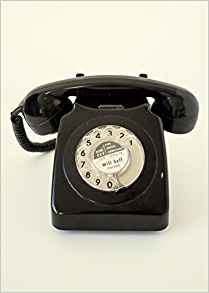
So Will Self, novelist, cultural critic and talking head about town. Just how does one try to get to grips with his opaqueness? Here are my thoughts, focussing on his latest novel, the last in a trilogy, "Phone".


Thursday, 17 August 2017

Literary Lacrosse Stick Quiz!

Yesterday I did an author Twitter takeover of my publishers Dead Ink Books  As part of the mayhem & madness, I set a 25 question quiz, with questions posed as crossword cryptic clues. (Hence the title, Literary Lacrosse Stick, to represent that my new novel has a couple of acrostics in it).

In case you weren't able to join in but have a hankering to pit your wits, here are the questions again.

I give the cryptic clue to the book title, the year of publication and the country of origin of the author.

Here's an example for you:  Junky American author’s unadorned repast (5,5) 1959

Answer: 


I'll publish the answers on the blog in a couple of days.

Happy solving!

1) UK author’s ossified time keepers (3,4,6) 2014 

2) Russian MA (Hons) celebrates with a salted rimmed glass of tequila & triple sec (3,6,3,9) 1967 

3) Polish émigré switches off all the lights at the hub (5,2,8) 1899 

4) Manchester author’s wind-up citrus fruit (1,9,6) 1962

5) Korean eschewer of animal comestibles (3,10) 2007

6) All change for this Czech, but the DNA remains exactly the same (3,13) 1915  

7) Junky author’s vermillion nocturnal municipalities (6,2,3,3,5) 1981

8) Anglo-Dutchman’s Sub-subcutaneous? (5,3,4)  2000

9) Pacifist Yorkshireman’s Infernal unison (3,6,6) 2006 

10) Yugoslav Civil Service as the source of agonies? (3,8,2,4) 2006

11) Austrian sporting custodian’s twitchiness in the face of punitive leathering (3,11,7,2,3,7,4) 1970 

12) Japanese Alice eschews egg-timer for the final apocalypse (4-6,10,3,3,3,2,3,5) 1985 

13) US author has Theseus’ conquest submit to its craving for nicotine (3,8,5,1,9,5) 2000 

14) Modern day French misanthrope would gladly blow each and every one of us to bits (8) 1998 

15) Orphaned NYC Borough (10,8) 1999 

16) Irish author’s nominal aphasia? (3,9) 1953

17) Count on this midday British author’s attribution of the cause of hay fever (6) 1995 

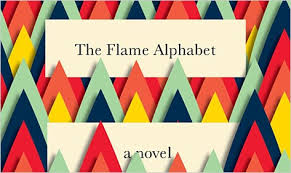
18) American writer’s ignited abecedary (5,8) 2012

19) Frenchman’s 26th and last, the back to the beginning for the first (4) 2010

20) American author relocates Hades between Brooklyn’s Polo grounds and Dallas (10) 1997 

21) Scottish author double negative rejection of state benefits amid mañana (3,3,5,3,4) 1983 

22) French author drops a quartet of aitches? (1-1-1-1) 2010

23) Nothing to sneeze at Russian SciFi author putting murder up his nose (5) 2011 

24) English author’s tale of the dictator of London’s W11 (3,8,2,7,4) 1904 


25) US once-a-decade novelist’s nuptial plans? (3,8,4) 2011 

Answers can be found here

Thursday, 17 December 2015

My 5 Favourite Reads of 2015

It's been a good year for reading, which isn't always the case, especially to judge by an uninvolving Man booker shortlist this year, though I have bought the Booker winner though that one will be a read for 2016.

I read 33 books this year, including one friend's, one author I started following on Twitter without making the connection to his book that had made it into my TBR pile, 3 works of non-fiction and one large 500 page tome I hope to finish before the year end which had I have completed it in time, might have squeezed into my list here - 
even if it did make the shortlist for bad sex in literature award this year. 2015 was also the year I popped my David Foster Wallace cherry with a collection of his short stories, but it was an unsatisfying experience so as yet I'm no further inclined to tackle "The Infinite Jest".
Anyway, here's my top 5.


5) 

I've had a mixed relationship with the work of Dave Eggers. Sometimes his literary conceits work for me and sometimes they fall miserably flat. This was almost perfect satire from beginning to end. People talked up "Mr Penumbra's 24 Hour Bookshop" which pitted the ancient book against the new online technology. I found that particular tome vapid, the characters uninvolving. For me Eggers was far more convincing in both spheres. I've heard criticism that the main character is two-dimensional and a mere mouthpiece for the points Eggers wants to get across about the menace of surrendering our lives to public scrutiny by putting ourselves body and soul online. But I found her slow grooming into the "Circle's" value system and global takeover ambitions rather nicely plotted and modulated. The Circle (Google/FB) is shown as a corporate cult, all its employees have to subscibe to the living tenets by which to organise their lives. Clever and spot on.

From my Goodreads review - A fiendishly brilliant satire on the way we as a society are a headed. If 1984 drops you right into an oppressive totalitarian regime, Eggers in this book takes you on the incremental journey how we end up there, not through brute force, but through technology. The oppressor is not the government, but a corporation who outflank the government and make it pay obeisance to them and their data and their surveillance; now politicians can be held accountable to their actions through transparency.

4) 

Where to start with this one? Other than to say I revelled in its irreverence. Irreverence towards the notion of story, of language, of everything we comfort ourselves by the notion of a novel. It reminded me of the detonations of language as Ben Marcus' "The Age Of Wire And String". I'll let part of my Goodreads review paint a picture - "This, my bedroom, with the stirrups, and the paneled bleachers stuffed overboard with chunky puppets. The men left encamped inside the father where he burst through all his horse suits like a dickface overall." The key word here, the perhaps lone orienting milepost, is 'stirrups', not in its equine sense, but in a gynecological one. For while I would never proffer the following as the definitive answer to what is the book about, I think this is a book from the fish-eye view of a foetus in the womb, peering out at the carnage and power relationships each time her parents have sex. The book is filled with slits and slots and stoma and a whole myriad of openings for gases, liquids and of course vision to squeeze through. And yes there is the implication of pedophilia too. The whole book reads like an assault, on the senses and the sensibilities, which is why one can never really recommend it, since not every reader is going to be comfortable with it. 

But I'm going to be contrary and recommend it now! For readers with fairly strong stomachs probably. 

3) 

I don't care what people say about Michel Houellebecq the man, but he is a top notch writer and thinker. Curmudgeon at best, misanthrope in the French tradition at worst, he shines a light upon the dreariness of human existence, but he always contextualises it in utterly recognisable ways and his political analysis through the pages is acute and forces the reader to think. No mean feat. This was his best yet, because it was a little less searing in its despair, yet his analysis of religion and race remain trenchant as ever. From my Goodreads review - For all the politics and philosophy and questing for purpose, what it all comes down to is the love of a good woman, or with Houellebecq's jaundiced view, the companionship of a good woman.

2) 

The book that was a long time in the making as apparently after his Booker nominated "C", he embarked on this but dumped it all in the bin and started afresh. I'm just going to reproduce a chunk of my review as it gives the picture of what the book is about and thereby its approach and form - A book about writing the great Pandect, the book about everything, 'to name our era, to sum it up'. Only of course this is an impossible task. The moment you make a decision what to start with, you exclude everything else and already have gone down a very singular, subjective track. The protagonist 'U' (echoes of Kafka's 'K'?) just about gets a title by the book's end. 

As McCarthy warns us early on, if you're in this for a story, you're in the wrong book. This is a montage, the remarkable application of mise en scene to a work of prose. So parachutes elide with jellyfish and oil spills with a metastatising tumour. U struggles to determine what is a genuine association from that which is synchronous or purely arbitrary. 

And why is he charged with this great feat? There are no more Renaissance Men, able to be learned in all branches of knowledge, yet international corporations put all manner of specialists on their payroll to feed into containing and predicting the commercial zeitgeist; U is an anthropologist, throwing ancient rites such as the death of a tribesman to herald the new year practised by the Vanuatuans with the waste landfill of Fresh Kills Staten island. 

1) 
Michel Faber is probably the supreme stylist writing today. His writing seems so effortless, whether a mammoth tome like this, a collection of short stories or a short novel like "The Courage Consort", the words are sheer perfection. This his latest opus, contains so many elements I shouldn't like, a book about quiet religious faith, the strains of a marital couple separated by distance and dwelling among aliens on their home planet. But this story is like a beautiful tapestry knitted together seamlessly that just aches with the humanity of its two main protagonists even while setting up an alien world of real imaginative interest. From my Goodreads review 

As close to a perfect read as I've ever come across.

A story that dissects a husband and wife's love so expertly.

A book that tears back the veil of communication and how double-edged it is and how easy to misinterpret meaning. 

A science fiction world that wears its inventiveness very lightly, yet somehow manages to authentically conjure up a truly alien sensibility. 

A novel about religious faith which I would normally run a million miles from rather than read and enjoy.

Superlative.


Friday, 30 October 2015

How I Battled Taylor Swift (And Won?)

I believe there are two types of fiction. That which provides the reader with an escape from their daily world. And that which seeks to actively engage with the world in order to try and probe and maybe provisionally provide some answers about it. Now hold that thought…

Last night I had the privilege of reading at Scriggler Live. I had two stories and as is habitual, i rehearse them hard in the run-up to the gig and that includes hand gestures as I try and enact them to some extent. Unlike a slam poet I don’t have the words committed to memory, but I am very familiar with them and know the precise timing of a gesture or when to look at the audience and the like. 

During the first of my two stories, there was some sort of minor commotion behind me on stage though there was nobody there. I carried on delivering my piece, but my brain was simultaneously working away furiously trying to figure out what was going on. Gradually I realised it was a ringtone. I later found out it was a Taylor Swift song. I wouldn’t recognise a Taylor swift ditty if my favourite football team ran out on to the pitch to its accompaniment. 

Now we’ve all seen footage of actors  on stage stopping the play to berate some hapless soul in the audience who forgot to turn off their phone and it goes off in the middle of their soliloquy. But I’m not really bothered by such things when I’m reading. Many venues are in the basements of drinking establishments, so you get used to background din. Had I have known it was a pop diva warbling away behind me, I might have objected to that, but there again me trying to battle against a rousing Public Enemy rap or some industrial art noise might have posed more of an issue (you’ll note the band logo of industrial noise band Einsturzende Neubauten on my chosen hoody for the performance).


It was only after the show that I started reflecting on how my brain had performed. For I still carried on my performance (whether it had been affected in any way you’d have to ask the audience). Yet it was also processing the unexpected sensory input of noise and trying to compute its exact nature. It passed through initial confusion into full processing mode until it solved the conundrum. The brain does not settle for working in a linear fashion. It can hold several different thoughts and emotions at the same time, let alone do various tasks and functions simultaneously.


So how does that relate to my opening statements? The fiction that proclaims to try and interrogate our world is largely hidebound. It employs language, linear  subject noun followed by verb followed by object… And stories, even ones that employ flashbacks and memories, are also in the main linear. Characters follow a developmental arc, that is they start at point A and by the story’s end reach point Z which may be redemptive or at least they have gained insight. But life itself is not linear and the human brain is certainly not linear. So how can fiction that largely follows linear structures and certainly employs linear language, hope to approximate the complexities of our contemporary world? So bizarrely, the Taylor Swift incident only served to reaffirm my faith in non-linear forms of fiction writing. Taylor I salute you, though is till won’t be listening to any of your music any time soon.


 Einsturzende Neubauten                                                 Taylor Swift


45 Flash fiction tales, many non-linear, available in print and ebook from Amazon & I-Tunes

(as is Taylor Swift & Einsutrzende Neubauten)

Wednesday, 13 March 2013

Theatre Versus the Novel


Award winning author Mark Haddon ("The Curious Incident Of the Dog In the Night Time") is about to stage his own book in a London West End theatre. That's a journey I made in the opposite direction, starting out writing plays and then moving into writing prose. Of course in terms of success and status, Haddon and me are on the opposite ends of the spectrum, I'm almost exhibiting hubris mentioning myself in the same breath as him. But I'm only raising it as Haddon made some interesting and I believe wrong-headed, statements in an interview he gave to London newspaper "The Evening Standard".

He claims to have given up novel writing for stage plays, ( I seem to remember Zadie Smith making the same claim as she wanted to concentrate on essay writing, but she has returned to the novel form recently) "so much better for the immortal soul" Haddon is quoted. I don't quite understand what he means by that.

It's true historically the stage play is an older form of literature stretching back to the Ancient Greeks and maybe there is still some sort of ghostly cultural inheritance from that. But stage plays are as multifarious as genre fiction, through the physical theatre of the likes of Theatre de Complicité, musical theatre, cabaret and burlesque, comedies, farces, absurd and avant garde through to the political theatre and theories of Brecht, Artaud and the like.

He therefore goes on to claim that theatre goers are more open to a broader spectrum of taste, than novel readers where "those categories are much harder to leap out of". Well, when I was working in theatre, the audiences were no less tribal, as were the commissioning artistic directors. Physical theatre practitioners and the more conventional staging of plays never mixed. The interesting contemporary stuff was going on in the Fringe theatres (as well as a lot of terrible material there too), almost never in the established West End theatres. And Haddon's example of the variety of seeing an Ackybourn and then a Roy Williams play, only strikes me as being superficially removed from one another. The theatre in Britain remains a middle class audience, even if Williams writes urban plays in patois.

British theatre produces very little new, contemporary work (unlike in the 1960s and 1970s when it genuinely formed part of society's discourse with itself during these turbulent times). Any aspiring playwright worth their salt, now jumps ship to the better paid TV or film, so there are few long-established, developed careers writing for theatre. The West End is dominated by musicals or what I call tourist theatre - classic plays from the dramatic canon performed by big name actors. In that sense I do understand Haddon's "immortal soul". Or the occasional new play that becomes so successful it takes off for Hollywood anyway and the stage version is like some vestigial homage or museum exhibit to it, as with "Warhorse". Haddon is perfectly entitled to adapt his own novel for the stage, it's still not exactly new material. It will just be an interpretation of a novel brought to life for the stage. He may go on and pen plays that didn't start life as a novel, but we're not able to be at that point of the argument yet.

So while theatre has a proud back-catalogue that it is constantly reinventing with new productions, the notion of writing new works to join that immortal canon is I think risible. Can anyone name a play of the last 20 years that could honestly be said to have joined the pantheon of great dramatic works? And when Haddon bemoans the loneliness of the novel writer in contrast to the playwright who collaborates with actors, directors, set designers, choreographers and musicians, he is surprisingly out of touch for someone who has demonstrated such savvy with social media; prose writing today in the digital world absolutely offers the author opportunities to burst out of their bubble. Both with regard to collaborators in design, video and digital platforms, but more importantly to their readers who now are the equivalent of an audience sat in a theatre auditorium. Their feedback can be instantaneous and at any stage of the writing process, just like the actors and playwright can feed off the reaction of the audience sat in the stalls. I don't know if Haddon is aware of the multi-media, multi-collaborator project involving Will Self called Kafka's Wound. That gives a sample of the possibilities of prose in the digital age.

I really loved Haddon's book "The Curious Case..." I thought it was an uplifting triumph of prose writing. I shan't be seeing it in the theatre though. For much the same reasons I gave as to why I don't go to see film adaptations of literary novels. I'll be interested to revisit these issues when Haddon premiers a brand new play written especially for the theatre.


Monday, 25 February 2013

Film Adaptations Of Novels


I see that a film adaptation of David Mitchell's "Cloud Atlas" opens this weekend. Recently we had all the excited pother around Yann Martel's "Life of Pi" being committed to screen. Two seriously literary heavyweight books I've read, but have no inclination to see either on the big screen. I rarely, if ever do.

Both these novels make demands of the reader's imagination. "Pi" has three changes of tone, starting with a light, charming tale of a boy's exotic upbringing in Pondicherry, moving into the fabulist and gripping shipwreck where he has a man-eating tiger as his onboard companion in the lifeboat, to the ending that turns the whole book on its head and makes the reader question everything that has come before. "Atlas" has six completely different stories, set in different times, written in different genres and linked thematically. The work that the author is asking of the reader in order to engage with these shifts throughout the novels, occurs within the reader's personal imagination. Because film is a visual medium and the visual is, for better or for worse, mankind's dominant sense, visualising what formerly only existed in the reader's imagination does I think, diminish the artistry of what the books achieve.

The remote relationship between a reader and an absent author, takes place through the words on the page. That's why there is such latitude for the reader's own interpretation to occur. The reader only has the words and his or her own interpretation of them. A film closes off too many of the options, bringing the director's interpretation to the script. Of course it is still perfectly possible for a film to leave much to the viewer's imagination. But faithful adaptations tend not to. The director and scriptwriters have each already played the role of reader, stamped their own interpretations of the book on the shooting script, so it enshrines an additional singularity of interpretation before the cinema audience sit down to watch the movie.

There is a question of when does a film stop being an adaptation and become 'based' on a particular book. The entire spectrum from faithful adaptations, through loose adaptations to inspired by a book exists. I cannot see the point of faithful adaptions. I don't believe that a film can bring the book to life any more than the book itself has done. Loose adaptations and 'based on' or 'inspired by' can do so, as they make a genuinely new work of art from that of the original book. That is the book may serve as a launch pad for a whole new artistic work. "Apocalypse Now" I believe is an example of just this. It's not merely Joseph Conrad's "Heart Of Darkness" updated and transferred from colonial Africa to the Vietnam War. It is wholly a vibrant, creative piece of art in its own right and one that acknowledges its literary sources of Conrad and TS Eliot in what is actually rather a literary film.

This differs from when say Shakespeare plays are given modern or historical settings other than those of Shakespeare's originals. Taking Macbeth, setting it in 1920s Prohibition Chicago, or the Politburo battling for power on Lenin's death, actually limit Shakespeare's art rather than expand it. For the words remain the same, as Shakespeare wrote them, so this is not genuinely a new art work. And though there may be some resonances with the power mongering of an Al Capone or a Josef Stalin, that history is already either known or sufficiently mythical to us, that again it closes too many interpretative options for its audience than it would when set in its vaguer and less well known times of 11th Century Scotland. The supernatural and prophetic element of Macbeth makes more sense in that setting than twentieth century Chicago or Soviet Russia.

Then there are the movies of books that are supposedly "unfilmable". William Burroughs' "Naked Lunch" and Laurence Sterne's "Tristram Shandy" being two such. To me a film director's assault on these great texts smack of hubris; they've been told that they are unfilmable, but they're going to try and rise to the challenge and make their movie anyway. The film versions of both sought framing devices to try and navigate a way through these difficult texts; "Naked Lunch" had the author Burroughs himself as character in the film, which kept jolting the action of the film out of the fiction it was supposed to be portraying. "A Cock And Bull Story" used the device of actors playing a movie director and actors trying to film "Tristram Shandy" as some sort of comment about the layers of distancing the narrative that was already opaque (the book itself prefigures post modern literary techniques, of unreliable narrator- who doesn't even get born until Book 3; of insertion and rearranging another writer's text- a technique Burroughs also used; parody and literary and philosophical allusion). In my opinion, both films failed lamentably and only boosted the notion that these novels are indeed unfilmmable and accordingly ought to remain unfilmed.

While some authors may well have the film version in mind as they write, literary novels that are written qua novels ought to remain unsullied by celluloid in terms of adaptations. Firstly I think it's lazy of scriptwriters, or more likely film executives, in their relentless casting around for fresh celluloid 'meat', to settle on a novel to bump up their quota of ideas to pitch. In the same way that novels are written for the artistic medium and narrative form of literature, films really should develop their own inhouse filmic language right down to the level of an original script. Film does so many things better than novels, particularly in telling a certain type of story, that it should stick to ploughing that rich furrow. The one area of a novel they can't really replicate is its interiority. Yes an actor and some mis en scene imagery can highlight and illuminate key interior moments of a film, but a cinema audience outside of an arthouse crowd are unlikely to stand for, or rather sit through, an entire film of interiority conveyed in just such a way. The worst example of a book being mutilated by a film I experienced, was David Peace's stupendous novel "The Damned United" which is set entirely inside the tortured mind of a real life professional sports' team coach, but its sheer artistry renders it clearly as a work of fiction. The film version was a limp trotting out of the real life events that the book refers to, but was completely unable to convey the interiority of the man which made the book such a triumph of writing.

I may be a Puritan when I say literature is literature and film is film. And I'm sure I'm in a very small minority when I say this. But there is a difference between literary fiction  and commercial fiction, which mainly revolves around the latter's centre-staging of telling a story, which makes it have much in common with the art of film making and the two can be perfectly suited to one another. Equally, to base a film on a literary book as its start point, but to then proceed to make the film as a wholly different and fresh piece of art, such as "Apocalypse Now", is entirely a legitimate endeavour. I grant that sometimes the line between the two is hardly distinct, but it does seem to be the difference between an 'adaptation' and 'based on' or 'inspired by'.

So no, I won't be seeing the film version of "Life of Pi" or "Cloud Atlas" anytime soon.


My post on why "Apocalypse Now" Is My favourite film of all time and its literary roots.

Wednesday, 28 November 2012

Some Thoughts On Constructing Character In Novels


The novel has remained a largely unchanged art form since its introduction. Other than the period of experimental Modernism by authors like Joyce, Woolf, Beckett, Faulkner and Stein. They are by and large stories revolving around a central character or characters, with beginning, middle and end. These characters undergo a "journey", more psychological than actual, in which they end up changed as a person by the novel's end compared with the point at which they started. This journey can notionally be 'plotted' by a character arc, that is the progress of their change of viewpoint could almost be plotted on a graph.

I have always seen the character arc and the notion of a journey itself as reductive. Human beings in real life don't undergo journeys, they just live their span of life and narratives and patterns may be imposed upon their lives to try and bring meaning to it. While I understand the notion that novels are illustrative rather than imitative of real life, I have always believed they can be illustrative through other models of mapping human behaviour and attitudes than the journey.

Psychoanalysts will tell you that people are creatures of mental habit. Locked into repetitive patterns of behaviour, often influenced by anxieties and neuroses, but especially by the action of the unconscious whose influence on them they remain by definition, unaware. Even psychically healthy people have blind spots about their own behaviour. Now I would never want to reproduce fictional versions of the theories of Freud, Jung et al, because I have my severe doubts about such theories for diagnosing and explaining human mental health. But the notion of unconscious behaviour is a useful one for fiction writers, because it allows the author to construct their character as having only partial knowledge. Thus  the author can gradually reveal the character through a slow drip-feed of information about the character through their behaviour and actions in the book.

So the unconscious serves conventional narratives as well as the less conventional. But I'm interested in this notion of people being habitual in their thoughts and responses. In my debut novel, I jumped straight into the character, where everything about her psyche is hanging out from the opening paragraph. She has been on a journey, socially through different milieus, and physically as the book opens with her hiding in exile. All the action has happened before the start of the book. Instead of a drip feed building up her character through accumulation like a stalagmite, the book is an unpeeling away of the repeated behaviours in the different contexts of her different milieus, to get back to the source of her 'stuckness'. The epigram for the book is "Saul knows everything except what to do with what he knows" from Steve Tesich's wonderful book "Karoo". There is no redemption on offer by the end, instead a powerful analysis of those social dynamics that both shaped and constrained her and an inquiry into the power of self-knowledge and the nature of self-delusion.

But for my new book, I decided to try something in a diametrically opposite direction. Rather than being stuck and habituated, condemned to repeat the same mistakes over and over, I went for a narrative structure of facing the same social situation time and again, but afresh each time and the vagaries of human nature and the influence of emotional colouring of thought processes, taking different decisions and having different reactions each time.  In this book, the characters never stand still. Their emotional state leads them to radically different courses of action. A missed cue or misheard word produces utterly different outcomes from those scenarios before. I found this a tremendously liberating approach to trying to get under the character's skin. The scenario was a seduction between a man and a woman. A situation replete with signals, codes, flurried emotions and calculations of effect and outcomes.

So three different approaches to character. Each trying to get under the skin of what it means to be human. To represent emotional truth in the characters. Are any of them better than any others? I do feel that the two less conventional approaches allow for a greater freedom, less formulaic writing and a certain freshness in tackling this most fundamental issue in the novel, of how to represent a human being.