So, 6 months into the year, 42 books read, of which 36 are fiction, with works from Iraq, Chile, Brazil and France among the UK & USA titles.
Here's my video from Booktube summarising the 6 months to date.
Other videos Mentioned
Philip Roth "The Great American Novel & Rana Dasgupta "Solo" https://www.youtube.com/watch?v=nqAV48sdOuU&feature=youtu.be
Jaroslave Kulfar "The Spaceman Of Bohemia" https://youtu.be/OlwSnIept8Q
Ali Smith "Autumn" https://www.youtube.com/watch?v=SfHge45VOMY&feature=youtu.be
Nicola Barker "Happy" https://www.youtube.com/watch?v=pHwKh...
Franz Kafka "Amerika" https://www.youtube.com/watch?v=zZ3a8...
Will Self https://www.youtube.com/watch?v=JCzX7...
Why I won't watch film adaptations of novels https://youtu.be/zGoeqH8-lSM
Book Covers https://www.youtube.com/watch?v=VDfvp5cR8sk&feature=youtu.be
28 More Random Questions https://www.youtube.com/watch?v=P9BNWEDTTbA&feature=youtu.be
Showing posts with label Will Self. Show all posts
Showing posts with label Will Self. Show all posts
Saturday, 23 June 2018


Tuesday, 17 April 2018
Literary Versus Commercial Fiction Part 405...
Despite us being on the same page conclusion-wise, I just wanted to respond to many of the points Simin Savidge makes in his Booktube discussion video looking at the false division between literary and commercial fiction that has reared its head again during the Literary Prize listing season.
Here is Simon's original video, definitely worth taking a look at.
The first point is that there is no doubt Will Self does stir things up with his provocative statements on the future of literature, but a) I don't think he's pinning it to low sales of his own book and b) while he is what may be called a literary snob, his points about the future of the novel are more to do with technology and how we read digitally more than the descrying the dumbing down of novels. (My profile of Self & his work here). So there is undoubtedly as Simon says snobbery among some readers and that is lamentable if it is aimed at readers who are being accused of not being clever enough to 'get' certain books. But I feel there is an equal tendency for an anti-intellectual tendency, to tear down difficult or complex books as elitist, as not speaking to anyone, as if these books didn't have a right to exist. To my mind that is the same type of snobbery merely inverted.
Simon calls for all books to have an accessibility and while that's true and an end always worth pursuing, I don't agree with his assertion that it is far harder to write books simply and accessibly. How exactly are we measuring the 'hardness of writing a book'? Who can say whether a book written simply is harder or easier than a complex, experimental book? It comes down to the individual writers, some find writing easier and quicker than others irrespective of what genre they write. Besides there is little merit in judging which one has worked harder, because ultimately it's not how much work an author has put into writing their book, it's the end product and what type of read it delivers for its audience. Finally regarding Simon's accessibility point, it's true commercial books reach more people which implies they are more universal; but not all authors write for a universal audience (or any specific audience in mind at all for that matter). Such authors must be permitted to write the books they want to write, to pursue the lines of literary, fictional & stylistic inquiry of their choice and the judgement of first, editors (as to whether to publish them, because they must possess some modicum of commercial potential however small scale) and then the judgement of readers, (for even without an audience in mind, the decision to write a book assumes someone will read it) will determine some sort of external verdict on the work.
The problems arise when readers and critics with a foot in one camp or the other of commercial vs literary, or simple vs complex, start defending their corner by pulling down their opponents' tastes. We all know what we like and enjoy reading, that is we all know our reading tastes, but you have to allow other readers with different tastes. And this is why literary prizes may be more harmful than good, in that fans jump on the debates they prompt to deride something they like that is omitted, or attack something they don't like that is included. Social media fuels the fires. But the thing is, don't take it so personally, a panel of judges listing books is not a slight on your personal tastes. Being a book lover and promoting your favourite authors out of your passion for their work, is not the same as supporting a football team and wearing colours and punching the lights out, or swearing at fans of the opposite team. Or at least it shouldn't be, but we edge ever closer. (This is not a development unique to the book world, same thing in politics, music et al, this ridiculous lurch into tribalism).
Simon states that pretentious books can alienate. Of course they can, but I find many non-pretentious books can alienate me as a reader for lots of different reasons. We either like a book, or we don't. Pretentiousness may be nothing to do with it. I absolutely agree any book has to carry a reader along with it, but as I discuss in my video below, there are many different ways that different readers can be carried away by a book - again we return to tastes.
The different elements of a novel that can appeal to the reader include but not restricted to -
1) Provides escapism
2) Absolute immersion in the real world
3) The story
4) Ideas/ Themes
5) Character - the psychology
6) Character - seeing through the eyes of a different person, sometimes far removed from you the reader
7) Style
8) Language
9) Metaphors
10) Formalism/ experimentalism
11) Me personally, I like discovering new words which authors introduce me to
Of course, in all likelihood it's a few of these taken together that determine the makeup of a reader's tastes, but the point ultimately it has nothing to do with pretentiousness, worthiness or whatever else Simon lists, as these things are not to his tastes, whereas to a reader who veers towards say (2), (9) and (10), the book may never strike them as pretentious or over-worthy.
I was very interested to hear his experiences of being a judge for a literary prize category. But prizes do create problems. How can you judge a collection of short stories against a novel for example? Or as he says, the Women's Fiction Prize is a vital prize, yet the appearance of literary together with commercial fiction on the same broad list -which after all the only criterion is fiction written by women - to my mind makes it impossible for judges to rate the merits of one book against another because they are not trying to do the same things at all. But there again, the notion of rating any book with some sort of putative 'score' is anathema to me. Simon talking about the brief he was given, to select a book that potentially could be in the most hands of potential readers, provided a mechanism that could cut through this comparative rating problem, but makes it one particular type of prize only. Come the next year with a new judging panel, will that same brief be employed? If it is, then really the prize should make that rubric public and if it isn't, then it just makes the whole thing seem quite random from year to year; that was the year that we wanted the greatest potential accessibility for the winning title, but the following year it was some other facet...
So although I agree with Simon's conclusions, as evidenced in my video below, I'm not sure I agree with the specific points Simon made in reaching the conclusion; that none of these divisions matter, let us be all readers to all books and make our own individual choices and not rag on readers with tastes different to your own.
Sunday, 11 February 2018
How Do You Solve A Problem Like Will Self? - Booktube video
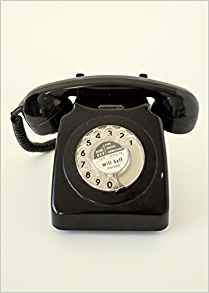
So Will Self, novelist, cultural critic and talking head about town. Just how does one try to get to grips with his opaqueness? Here are my thoughts, focussing on his latest novel, the last in a trilogy, "Phone".
Sunday, 17 December 2017
Standing Up For Readers
Over the last couple of days I've read two articles bemoaning the decline in literary fiction and offering reasons behind the trend. The first was The Guardian newspaper's coverage of an Arts Council report on declining sales of literary fiction and which I'll touch on at the end of this post. The other was Larissa Pham writing in The Village Voice that readers are failing to read 'properly' to judge by the reaction to a New Yorker short story "Cat Person" that went viral and prompted a lot of response. How very dare she claim that readers don't know how to read properly.
Why do readers read books for pleasure? Why do they devote a not inconsiderable chunk of their leisure time to a book? If you'll forgive me, from this point on I'm going to elide the pleasure/leisure reading motive as 'pleisure'. A reader can derive pleasure from a book in many different ways, so much so there is no typical reader. Myself I enjoy language, metaphor, voice (character and/or authorial) and innovative narrative structures in novels. I'm less bothered by story or endings (twisty or otherwise). Nothing gives me more pleasure than being sent scurrying to a dictionary to look up a new word I've come across in a book. Now I know plenty of readers who object to this as it drags them out of the story (I know this because my own writing has prompted this entirely legitimate response). Different strokes etc. The spectrum of readers' pleasure is very wide indeed.
"Cat Person" went viral, but does that mean every single reader and sharer committed their thoughts publicly on social media? Of course not, so why does Pham use the comment evidence to represent all readers? Her claim is that many of the commentators took the story as non-fiction and responded accordingly. So what, they still derived pleasure from the read, enough to continue the conversation after finishing it by commenting on line. She blames literary criticism for failing to educate readers to be able to read texts properly, so it's no wonder the readers missed the point. Again, how very dare she! There may well be a crisis in literary criticism, but is there only one way to read a story and that is through a literary criticism lens? Of course not, readers derive pleisure in many different ways as we have already established. I would put it to you that if a litfic novel is so up itself that it can only possibly be read in one single way, it has failed the reader, not the other way around.
Furthermore, who is to say what is and what isn't fiction? Plenty of litfic books are consciously written to give the impression they are fact: the very excellent "House Of Leaves" for one. Historical Fiction actively blurs the boundaries, since it is avowedly fiction that must appear authentic to the historical age in which it is set. And even memoir, which is filed under non-fiction, actually veers into fiction through the mere act of organising a life into a narrative, which means foreshortening, omission and the like. The very term 'creative non-fiction' is a nod in the direction of this admission.
Readers are entitled to read just what books they want in whatever way they choose. Writers are (or at least should be) free to write whatever book they choose. The trick is to make the two dovetail. If literary fiction is failing to do so (as falling sales might suggest), then the fault is that of the writer not the reader. Fiction writing is an act of the imagination. If it fails to engage the imagination of readers, then the fault does not lie in the readers' imaginations, but that the writer has failed to reach them. Good writing draws the reader into the author's imagination, if it doesn't happen, again the failure is with the writing.
I have no idea if the world is dumbing down or not, but one segment you would proffer as immune is those who read for pleisure. Reading and literacy are two fundamentals of intelligence. So even if the world is dumbing down, there is no evidence that readers are, whatever Pham alleges. And as to The Guardian's reporting of reduced litfic sales, this overlooks a different way of reading that is not included in sales figures. Readers as consumers have become cute, there is plenty of free literary content available for them to read. I myself publish my flash fiction online for free and they are well read. But that will not register as sales, yet it is still literary fiction being read. The growth of book bloggers and booktubers wanting to share their love of books would suggest both that fiction is in a very strong place (admittedly many review genres other than litfic), but also that the literary criticism so lambasted by Pham has just become more democratic. That has to be a good thing, since so much of academic literary criticism is inaccessible (both physically and in terms of legibility), what is so wrong about having a more legible literary criticism? I myself offer a BookTube review site for litfic which I would peg below the academic level but hopefully all the more accessible accordingly. A final hopeful indicator of literature's future health is the expansion (explosion?) in Young Adult fiction which augurs that there will be new generations of readers brought up on this remarkably successful genre. Pham presumably would offer that none of them will graduate on to litifc, but remain reading YA. Well if they do, all well and good. Then you need to ask the question why haven't litfic authors manage to hook them on to their adult wares?
It seems to me this all part of the snobbery and elitism around literature that keeps people at arms length from it. Look at the snobbery aimed at graphic novels or fan fiction. Yet in a way litfic also is a form of fanfic. The works of Jasper Fforde with its literary games and references is to my mind absolutely a literary version of fanfic; Fforde's employing characters and books of those who came before him in a celebratory way. Canongate ran a series of novels by literary authors such as Jeanette Winterson and Michel Faber, reinterpreting classical myths for the modern age. Not what you might classify as fan fiction, yet predicated upon a love and respect of the original literary myth from each of these authors.
Lastly on to the Guardian article. Several reasons are offered for declining litfic sales. The competing pull of other digital entertainments is one cited. But if a novel is not able to compete with reality TV, meme videos, Angry Birds or whatever, then I would posit that it's because the novel is not entertaining enough. Reading as a pleisure activity is a form of entertainment, probably the least passive of those cited above. People living on their phones does not inevitably signal the death knell (ringtone?) to novels, but novelists do have to respond to its attraction and offer an enticing alternative. As that article signs off quoting Will Self, the by-the-numbers rote writing of MFAs (creative writing courses) is a very real reason underlying why litfic is failing to connect with readers. But MFA's are far more relevant to the US than UK writers, while the article also points to the growth of independent publishers as feeding the appetite for engaging lific where perhaps the large publishing houses are failing. But of course, that is not reflected in a significant sales uplift since the typical first print run of an independent is 500-1000 copies. And hypocritical of me as this is, I would suggest the Guardian article entirely missed the point of the Arts Council report, by focussing on the virtual impossibility of a litfic author making a full-time living from their fiction. For a start, this has been the case for some considerable time predating the digital publishing revolution, with many authors having to supplement their income from other means: Kafka worked in insurance; Larkin was a university librarian, several are journalists and literary critics. But I say the article missed the point, since Will Self has so much more to say about the current state of literary fiction than just MFAs. His analysis goes into the the way we read on the printed page compared to a digital screen, how language is organised and arranged digitally; "why are people going to continue writing {novels} for a medium that people no longer read it on?"
I haven't read the Arts Council report which The Guardian was reporting on. As per usual the response to a supposedly endangered art form is to suggest it needs some sort of (financial) support. Not having read the report, I'm curious how they propose to do this. Given how many books are published each year and how many authors there are, what is going to be the selection process for supporting individual authors? To plough through the inevitable welter of submissions for funding would require the Arts Council to employ an internal staff of the order that Facebook and YouTube are finally getting round to do to weed out extremist content on their sites. it just isn't practicable and in the way of these things, will likely tend to settle for elitism in their final choices of lucky recipients, since their labyrinthine application system will weed out all but the most savvy of bidders.
In a digital age you cannot just measure people consuming litfic just by sales. If there is indeed a crisis in litfic, perhaps gainsaid by book bloggers and independent publishing house growth, then the fault is with the authors and those who produce their work for them in the form of publishers and editors. The fault is not with the readers.
*
My new literary fiction novel "Three Dreams In the Key Of G" will be published by independent publishers Dead Ink Books early in 2018

Wednesday, 15 May 2013
Visual Literature
So, just what can the new digital technologies offer literature? Embedded links so that you can choose the precise path through a text, such as the collaboration behind Kafka's Wound, with archive photos, documentary, audio and an essay by Will Self. Or there's Nick Cave's vook "The Death Of Bunny Munro", a book with music videos and author readings embedded.
But these are really extras around the text, 'the making of' equivalent in movie DVDs. They do very little with the original text itself, other than frame it with these frills. The urge to click in "Kafka's Wound" kept talkin me out of what was a very sophisticated central essay by Self that demanded full concentration, so managed to work against the text.
I have always been interested in delving even further into a text, beyond that of the words and down to the very DNA of written language, the letters themselves.
I have commissioned visual literature that embed the words & letters in a visual representation. Examples can be found here, where coherent sentences emerge from the primordial soup of a jumble of letters, the play of image and words reinforcing one another.
But there is an art form that I believe offers even more to maximise the significance and contribution of the typography to the meaning of the text itself. And that art form is known as kinetic (or motion) typography. I'm not sure how well known it is, as the entry explaining it in Wikipedia is pretty skimpy. The best way to demonstrate it is simply to watch some of the videos. There's a dedicated part of the Vimeo video site to kinetic typography.
I studied them in my search for a designer to collaborate with. And I was disappointed. Not with the look of the videos, which are fantastic, but with the lack of imagination behind the choice of texts, which unfortunately in my opinion served only to widen the gap between text and representation through motion typography. The texts are often film dialogue snatches or song lyrics, and accordingly only serve to show off the art (Vimeo is after all a shop window for artists, so this is partly understandable). Then there is the other main use of kinetic typography, in advertising and marketing videos, where the text is often dry and target-led rather than artistic.
Finally there is the example of perhaps the most viewed of all kinetic typography films, Stephen Fry talking for 6 minutes about the wonders of language, all represented by the visual echo of his spoekn text made to move. I use the word echo, but directly parrot might be more accurate. I'm not sure in this case that the visuals add anything to Fry's rich vocal rendition. Apart from movement for movement's sake, I don't think the visuals advance the text in any meaningful way that bring out new or different shades of meaning to the oral.
Writers have to think what might be the case for animating their text. Rather than that dreaded term 'added value', the reason for it must exist within the text itself. And that means thinking about the words, what about them demands to be sparked up and shoot across a screen. But it also means thinking about the letters making up those words. For kinetic typography morphs, mutates, reverses, spins, rotates, severs, disappears, magics letters in its very being.
So I have this text about dementia. A gradual loss of language ability, where words mutate into close sounding but otherwise unrelated by meaning other words as letter blindness and problems of recall set in. The perfect medium for representation in kinetic type. The text informs the animation and the animation gives extra edge and depth to the text.
So writers, please think about your texts and whether kinetic typography can serve to give depth, resonance and complexity to them. And graphic designers, please think about collaborating with writers for some interesting texts to bring alive. Texts that may even have been written with animated typography in mind.
Wednesday, 13 March 2013
Theatre Versus the Novel

Award winning author Mark Haddon ("The Curious Incident Of the Dog In the Night Time") is about to stage his own book in a London West End theatre. That's a journey I made in the opposite direction, starting out writing plays and then moving into writing prose. Of course in terms of success and status, Haddon and me are on the opposite ends of the spectrum, I'm almost exhibiting hubris mentioning myself in the same breath as him. But I'm only raising it as Haddon made some interesting and I believe wrong-headed, statements in an interview he gave to London newspaper "The Evening Standard".
He claims to have given up novel writing for stage plays, ( I seem to remember Zadie Smith making the same claim as she wanted to concentrate on essay writing, but she has returned to the novel form recently) "so much better for the immortal soul" Haddon is quoted. I don't quite understand what he means by that.
It's true historically the stage play is an older form of literature stretching back to the Ancient Greeks and maybe there is still some sort of ghostly cultural inheritance from that. But stage plays are as multifarious as genre fiction, through the physical theatre of the likes of Theatre de Complicité, musical theatre, cabaret and burlesque, comedies, farces, absurd and avant garde through to the political theatre and theories of Brecht, Artaud and the like.
He therefore goes on to claim that theatre goers are more open to a broader spectrum of taste, than novel readers where "those categories are much harder to leap out of". Well, when I was working in theatre, the audiences were no less tribal, as were the commissioning artistic directors. Physical theatre practitioners and the more conventional staging of plays never mixed. The interesting contemporary stuff was going on in the Fringe theatres (as well as a lot of terrible material there too), almost never in the established West End theatres. And Haddon's example of the variety of seeing an Ackybourn and then a Roy Williams play, only strikes me as being superficially removed from one another. The theatre in Britain remains a middle class audience, even if Williams writes urban plays in patois.
British theatre produces very little new, contemporary work (unlike in the 1960s and 1970s when it genuinely formed part of society's discourse with itself during these turbulent times). Any aspiring playwright worth their salt, now jumps ship to the better paid TV or film, so there are few long-established, developed careers writing for theatre. The West End is dominated by musicals or what I call tourist theatre - classic plays from the dramatic canon performed by big name actors. In that sense I do understand Haddon's "immortal soul". Or the occasional new play that becomes so successful it takes off for Hollywood anyway and the stage version is like some vestigial homage or museum exhibit to it, as with "Warhorse". Haddon is perfectly entitled to adapt his own novel for the stage, it's still not exactly new material. It will just be an interpretation of a novel brought to life for the stage. He may go on and pen plays that didn't start life as a novel, but we're not able to be at that point of the argument yet.
So while theatre has a proud back-catalogue that it is constantly reinventing with new productions, the notion of writing new works to join that immortal canon is I think risible. Can anyone name a play of the last 20 years that could honestly be said to have joined the pantheon of great dramatic works? And when Haddon bemoans the loneliness of the novel writer in contrast to the playwright who collaborates with actors, directors, set designers, choreographers and musicians, he is surprisingly out of touch for someone who has demonstrated such savvy with social media; prose writing today in the digital world absolutely offers the author opportunities to burst out of their bubble. Both with regard to collaborators in design, video and digital platforms, but more importantly to their readers who now are the equivalent of an audience sat in a theatre auditorium. Their feedback can be instantaneous and at any stage of the writing process, just like the actors and playwright can feed off the reaction of the audience sat in the stalls. I don't know if Haddon is aware of the multi-media, multi-collaborator project involving Will Self called Kafka's Wound. That gives a sample of the possibilities of prose in the digital age.
I really loved Haddon's book "The Curious Case..." I thought it was an uplifting triumph of prose writing. I shan't be seeing it in the theatre though. For much the same reasons I gave as to why I don't go to see film adaptations of literary novels. I'll be interested to revisit these issues when Haddon premiers a brand new play written especially for the theatre.

Tuesday, 14 August 2012
Kafka's Wound
"Kafka's Wound" is a multi-media collaboration on a new Arts Council funded digital site called The Space, hosted by the London Review of Books and partnering with Brunel University.
At its heart is a literary essay on Kafka by Will Self, but there are lots of links embedded behind icons that take you to the work of other artistic practitioners, in the form of photographs, music, animations, art works and videos all commissioned for this piece. It's very exciting, a magical mystery tour and well worth a look. And deeply flawed of course...
Self's essay is quite brilliant. A confessed non-academic literary critic, it's more of his personal relationship to the writing of Kafka, clearly a seminal influence for him. As Kafka is for me. And like me, Self eschews trying to analyse Kafka's work, as sublime and uncanny and beyond any forensic authorial dissection. In my case, Kafka is perhaps the sole writer I have never read with an analytical eye. For where his voice is otherworldly, mine is lumpenly rooted in the material world around me; where his words are lean and taught, mine look to bludgeon each other into insensibility.
Self points out that "Kafkaesque" is THE adjective that prevailed into our modern idiom from literary modernism, more than "Proustian" or "Joycean". And Self also lambasts lazy thinkers who all too easily resort to the adjective for anything intricately labyrinthine. He suggests that Kafka's representation of the individual overwhelmed and disoriented by faceless bureaucracies and unseen legalistic powers, was perhaps only supplanted by George Orwell's depiction of Totalitarian states putting the jackboot and the granite face on to these restrictive, oppressive forces.


But I feel Kafka's vision is back in place of primacy as Orwell's dread regimes crumble away and the technology of the internet atomises us all amid a welter of discombobulating data and information. With the Totalitarian regime, everything was prescribed, limits were in place, the eyes of the State assumed to be everywhere; the reason I struggled with "1984" was that the power of the State was so all-encompassing, I never believed Winston Smith had a chance of getting away with his transgressions. Hence the book had no tension for me. But with Kafka's "The Trial" and "The Castle", the forces of oppression are like ectoplasm. They are powerfully indistinct, chokingly nebulous, so the individual never knows at any moment exactly where they stand and that is far more punishing to the mind. I feel we are back at that point now, not at the hand of any government nor overtly oppressive agency. Merely the power of the free market.
There are no limits to production and consumption of virtual goods. But with that bombardment of data and information online and in digital form, how do we know we are getting the bits we want or need? We may be missing something in the deluging torrents that pass us so quickly. Even if we have the 'right' text at our fingertips, we may be so desperate to look out for the next piece in the jigsaw, we only read it cursorily, missing things buried inside.
And this is what I feel with this whole project of "Kafka's Wound". The essay at its heart is as I said, brilliant. Initially every time I clicked on an asterisk, it brought me an instant pop-up footnote or explanation which was convenient. But soon it brought up a video, an animation or a photo. As was designed for the whole project, to function like a treasure hunt of association. Yet in doing so, each time I was taken out of Self's essay. There was simply no way of being able to read and digest it as a whole. I was, at my own clicking fingers, bombarded with tangential connections and associative flavours. Narrative was utterly fractured. Now this might work well with a fiction piece, giving it further layer upon layer of meaning. But for an essay, a tightly structured throughline of logic and argument, even one as non-linear as by Will Self, such diversions become digressions and detours which shatter any coherency for the reader. Argument and logic proceed by linear steps. The multi-media egg hunt is anything but linear.
I would welcome such a multi-media, non-linear approach to a work of fiction


Subscribe to:
Posts (Atom)